
Lokhandwala Complex has always had a reputation for many things simultaneously. The celebrity sightings. The chaotic, compressed energy of a neighbourhood that manages to be both intensely residential and commercially active at once. The street food ecosystem that somehow produces excellent meals in the middle of an otherwise unremarkable street. The traffic that can turn a two-kilometre journey into a twenty-minute negotiation. The social scene that has sustained itself across decades of Mumbai life.
What Lokhandwala is less known for, but increasingly deserves recognition for, is its fitness infrastructure. The density of quality training options accessible from Lokhandwala and the surrounding Andheri West streets has grown substantially over the past few years, and the quality of what is available has shifted upward in ways that are genuinely significant for the neighbourhood’s professional and creative population.
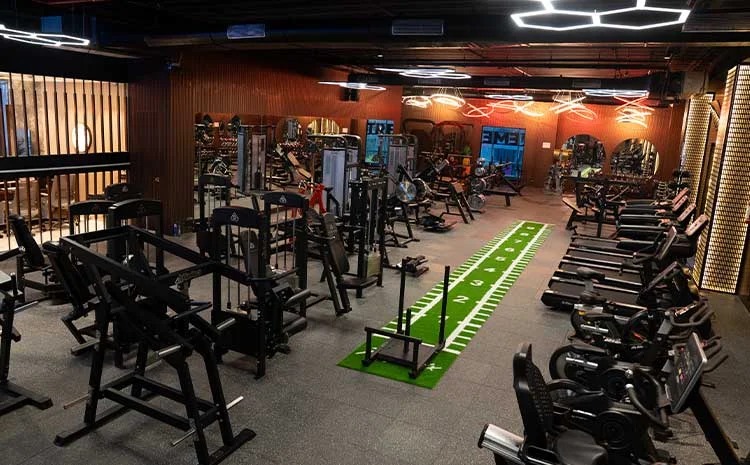
Residents now have access to specialist strength facilities, functional training studios, boutique yoga and movement spaces, and integrated training-and-recovery facilities that offer a level of quality comparable to what you would expect in cities with a more established premium fitness culture. The gap between what Lokhandwala residents can access and what was previously available only in south Mumbai or Bandra has largely closed.
The geography of the neighbourhood is a practical advantage that deserves more credit than it typically receives. Lokhandwala sits at a natural hub point for the western suburbs. The streets that connect it to Versova, Oshiwara, and Juhu are manageable in the early morning, before the traffic reaches its daily peak. The major arterial roads, New Link Road and the parallel corridors, make transit to and from fitness facilities predictable in a way that is harder to achieve from more residentially isolated parts of the city.
For the creative and professional population that has historically made Lokhandwala home, the early morning training window is particularly valuable. The media and entertainment industry professionals, the freelancers, the startup founders, and the entrepreneurial community that gives the neighbourhood much of its energy all share a common constraint: the working day has a way of consuming time that was theoretically available. Training before the day begins is the structural solution that most of this population has arrived at independently.
A gym near Lokhandwala of genuine quality, with expert coaching and proper recovery infrastructure, is now within a ten to fifteen minute journey of most Andheri West and Lokhandwala addresses. For professionals who need to train before the city wakes up and return home before the first obligations of the working day take hold, this proximity is the difference between a sustainable habit and a perpetually deferred intention.
The celebrity dimension of Lokhandwala’s fitness culture is also worth acknowledging, not for the glamour of it but for the practical implication. Fitness facilities that serve a population with high aesthetic and performance standards are typically held to higher standards themselves. The expectation of quality, maintained equipment, expert coaching, and a genuinely premium environment is not optional in a market where the members know what excellent looks like and will not stay where they are not getting it.
Lokhandwala has many legitimate claims to recognition in Mumbai’s cultural and commercial landscape. Its fitness infrastructure is becoming one of them, and residents who have not yet taken advantage of what is available close to home may be surprised by what the neighbourhood now offers.
To Sum Up
The trajectory of Lokhandwala’s fitness infrastructure over the next several years is likely to continue improving. As the premium fitness market in the western suburbs matures, the quality floor will rise. The facilities that survive and grow will be the ones that have invested in coaching quality and recovery infrastructure rather than simply equipment selection. For residents who are considering joining a gym or upgrading their current membership, the timing is good. The choice available within a practical distance of most Lokhandwala addresses is wider and better than it has ever been, and the investment in a quality local training habit is one that compounds across every dimension of professional and personal life. The neighbourhood has earned its place on that list, and the residents who take advantage of what is now available locally will find the habit considerably easier to build and sustain than those who continue assuming that quality requires a journey.
